

Caws, clicks, rattles and coos
What are crows saying?
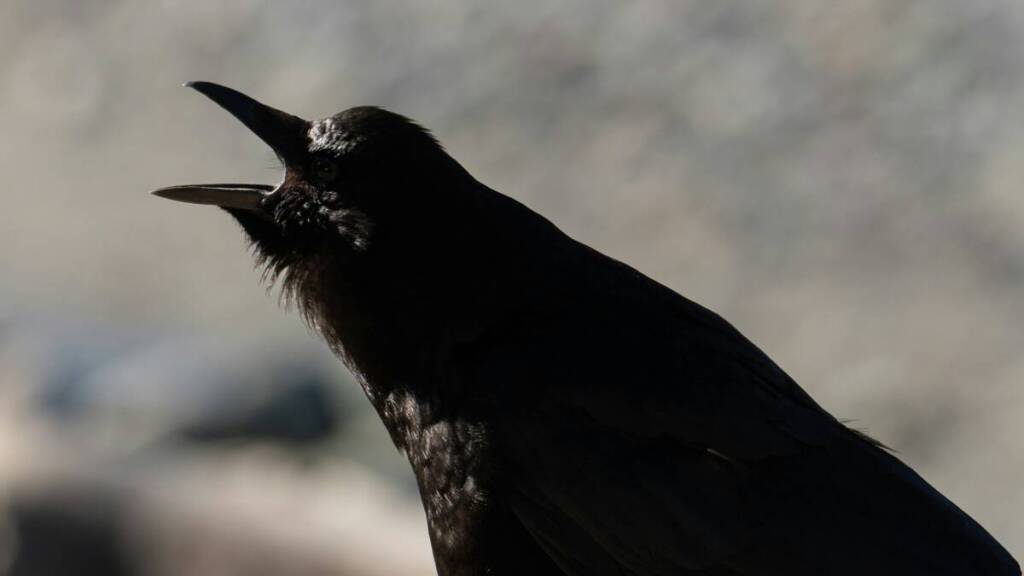
In my new young-adult novel, the crow characters talk. They talk about finding food, avoiding danger, and what they must do to survive. They also fight, tease, gossip and tell stories. In many ways, they communicate like humans.
Anthropomorphism? Guilty as charged. (I will explore the A-word in a future post. For now, I want to focus on crow communication, both in my book and in the real world.)
While writing and editing Shade of Wings, I struggled with what I call crow-isms: words or descriptions crows might use for distinctly human things. Cars became “gas breathers” and roads the “hard gray.” But I was inconsistent, as one beta reader pointed out.
When I went for consistency, it sounded cumbersome to my editing ear. So, I abandoned most of my crow-isms, deciding that flow and readability were more important. I did try to be authentic when writing about the subjects of my crows’ conversations (food, survival . . . mates).
In the real world, crows vocalize a lot, but researchers have been somewhat frustrated in their attempts to determine what they’re communicating beyond the obvious: the chorus of shrill alarm caws to warn of a predator; the insistent, nasally begging of fledglings; and the soft coos, rattles and growls between mating crows.
While writing my book, I tried to be alert to the more than twenty distinct sounds crows make. One afternoon, I heard a great cawcophony across the street and went out to investigate. When I spotted the source of the fuss, I laughed. There, hobbling along the sidewalk was our neighbor’s ancient and diabetic cat, Fred.
Predators, even Fred, give crows a clear reason to caw. But what are they saying in less obvious circumstances? Humans have yet to figure that out.
Dr. Kaeli Swift, a crow researcher and specialist from the University of Washington, addresses what we know and don’t know about American crow vocalizations in her excellent Corvid Research blog.
She cites a study by her colleague Loma Pendergraft of crow vocalizations around food. The data revealed few clear patterns, but one that did emerge was the shorter calls crows gave when presented with a large amount of food (25 peanuts) versus a small amount (one peanut). Contrary to what you might expect, those shorter calls 1) Didn’t bring more crows to share in the bounty or 2) prompt any aggressive or territorial reaction among other crows.
In contrast, crow calls before the appearance of food were longer, and a playback of those calls did prompt behavior associated with aggression and territoriality. To researchers, these findings suggest crows have learned to pay attention to human behavior (peanut throwing), and that communication between crows may be more subtle and nuanced than we humans can detect. Other studies have shown that crow groups have their own distinct sounds, or dialects, and that crows can recognize the calls of those they know.
Pendergraft answered some reader questions about crow vocalizations for Kaeli Swift’s blog. Here are some edited highlights:
- Do crows try to get the attention of their human feeders with sounds? Yes, crows will certainly try to use sounds to get their feeder’s attention. I have a family of crows that come to my office window, and they’ve learned that if they give a rattle call, I’ll feed them.
- Can crows describe specific people to other crows? Not directly through vocalizations (e.g., “the dangerous human has black hair and a red shirt”), but they can do so indirectly. If a crow sees a dangerous person, they communicate the presence of danger via vocalizations (“danger here”). When other crows arrive, they watch what the calling crow does to identify which person is dangerous . . .
- How many different sounds can a crow make? More than most people think. The loud caws make up the bulk of their vocalizations, but they will also utter rattles, growls, coos, and other odd sounds. They are also decent mimics and can learn to imitate the vocalizations of other animals (including people).
- What do the number of caws in a sequence mean? We don’t know. They are probably important, but only as one component among many.
- Can you distinguish males and females from their calls? I can’t, but there is evidence that the crows can.
- People described one particular sound in a variety of ways. . .. I suspect you’ll know it as the rattle call. By any name you wish you describe it, what does it mean? Unfortunately, we don’t know what it means. There is evidence that only female crows make this sound.
I’m excited to share that Dr. Kaeli Swift will be joining me for a book/crow talk at Birds Connect Seattle Thursday, July 16, at 6:30 p.m. The address is 616 Olive Way. Register here.


