

Why did thousands of crows swap bedroom communities? We humans want to know
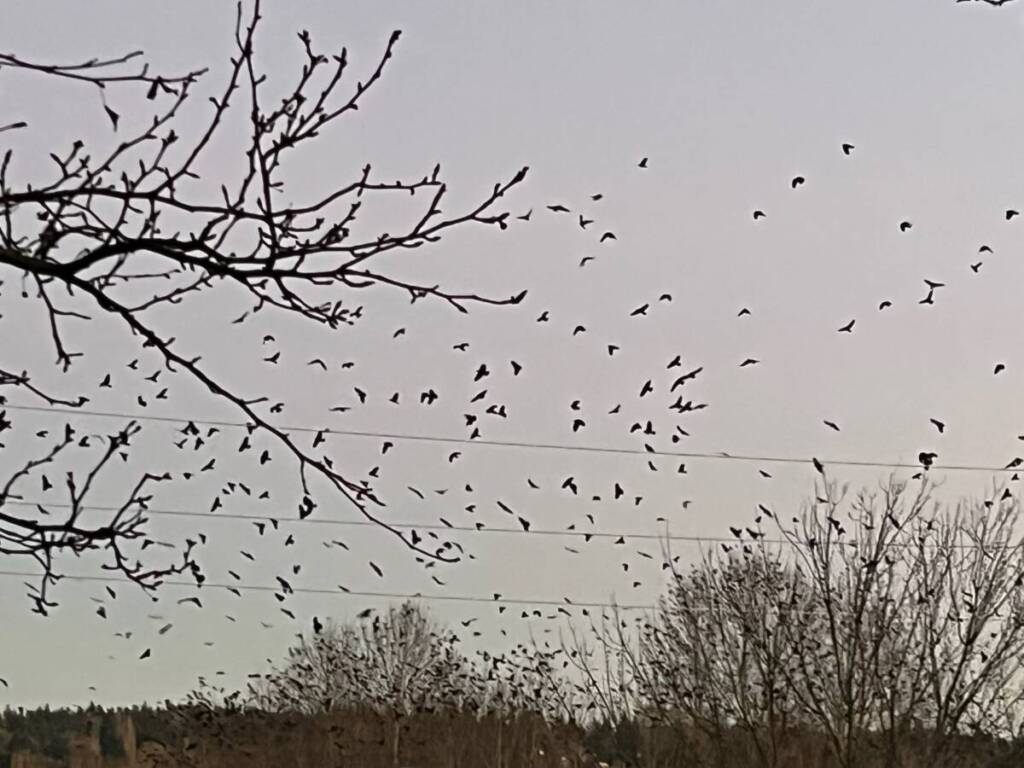
If you live under the flight path to a crow roost, you’ll know it by the appearance of hundreds of black birds sprinkling the early evening sky, all of them going more or less in the same direction.
For years, I’d see crows passing northeast over our Seattle neighborhood on their way to a roost at the University of Washington branch campus in Bothell, WA. My husband, Mark, and I drove up there several times to watch them arrive.
At the roost’s peak occupancy, more than 20,000 crows congregated on the east side of campus. They would fill the athletic fields and line the rooftops in what looked like an exuberant slumber party. After a good bit of socializing, they’d settle into the trees of a restored wetland to sleep, secure in their numbers.
Had we gone up the following year to see them, we would have been disappointed. Without telling anyone, more than half of the crows ditched Bothell in favor of a natural area about four miles (as the crow flies) to the southeast in Redmond. By January 2025, the Bothell roost was no more.
To find out why the crows moved, Mark and I attended a January crow watch and talk by Doug Wacker, UW Bothell associate professor of animal behavior. With his students, Wacker has spent years studying our local crows, analyzing their roost patterns, vocalizations and more.
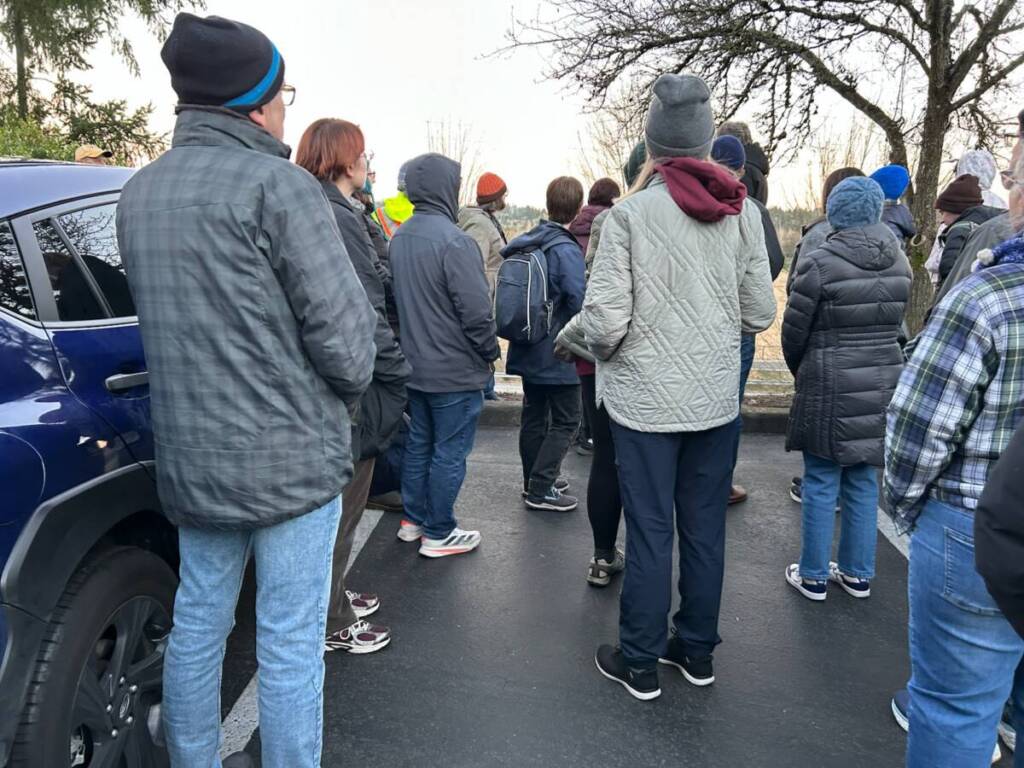
The first thing I confirmed at this event is that people are endlessly fascinated by crows and will go out on a cold Friday night to watch and learn more about them. The free event was “sold out” with 150 people registered and 48 more on a waiting list.
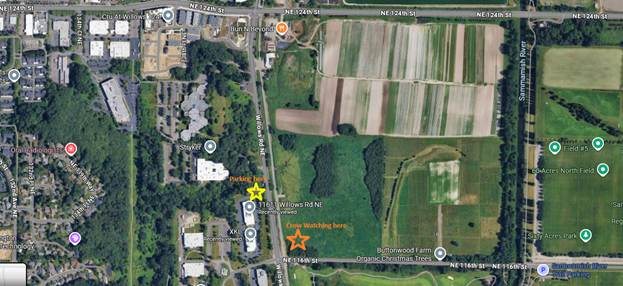
We gathered just before dusk at a business park across busy Willows Road NE from the roost at Sammamish Valley Park. From there we could see the crows fly in, starting as a trickle then peppering the winter sky in what scientists call an “a pre-roost aggregation.” When it finally got too dark to see them, we crow watchers headed for the warmth and comfort of a community center lecture hall to learn about what we’d just witnessed.
Why do crows roost? Wacker listed several reasons, mainly related to safety and communication. There’s security in numbers. Any owl who dared approach a roost would trigger an early warning system alerting thousands of crows of its presence.
The communication function of the roost is abundantly clear to anyone watching the nightly spectacle. Pre-roosting is a noisy affair. Scientists believe that the pattern, volume and length of caws, as well as the silences in between, are the crows conversing and perhaps sharing information. It’s impossible to know what they’re saying, but Wacker and his students have conducted experiments to determine if the birds respond differently to calls in various patterns.
Of course, the million dollar question of the evening was: Why did the crows leave Bothell and move to Redmond? Especially given that roost movement without human harassment isn’t typical.
Again, Wacker listed several hypotheses:
- Maturation of the tree growth at the UW Bothell wetlands made it less suitable.
- Campus development and the resulting loss of pre-roosting, or staging, sites.
- An influx of geese.
- Construction on Highway 405.
- Overcrowding of the 52-acre site.
The reason(s) could be any or all of these. It’s a “murder mystery,” quipped a recent front-page article in The Seattle Times.
A perk of writing fiction (versus news) is that I can run with my best guest. I’m leaning towards overcrowding at the UW Bothell campus. Yes, crows are social creatures, but I think they also like their space. If you’re snoozing below a multitude of your brethren, you’re bound to get pooped upon. (I’ve seen evidence of this indignity on the backs of my neighborhood birds.)
A far more serious problem threatens the crows in my forthcoming novel, Shade of Wings. My speculative, young-adult novel centers around a family of New York City crows struggling to survive the outbreak of West Nile virus during the sizzling summer of 1999.
My book launch will be Thursday, June 4, at 7 p.m. at Third Place Books Ravenna in Seattle.
The crows in my novel go to a roost on Staten Island to gather information on what they’re calling the “blind death.” As the virus spreads, the roost empties and becomes a hostile place. There’s a chilling scene there that traumatizes one of my main characters. You’ll have to read the book to find out.
Fortunately, nothing so horrible befell our formerly Bothell-now-Redmond crows. They appear perfectly content as they stream towards their roost every day at dusk. Now I know that we humans have harmed birds (maybe not crows so much), but there’s something reassuring about them going about their business in spite of us.
“There go the crows!” I say to Mark every time I see them flapping overhead. They’re as regular as the sunset — except now they’re heading east to what I’m assuming are more comfortable sleeping quarters.


